
Why cooking is one of the best school readiness activities
When we picture school readiness, most of us think about letters and numbers on a page. A lot of it is quieter than that. It's a child who can wait for a turn, follow a few steps in the right order, and try something new without giving up. Cooking builds all of those things, which is one reason it has a place in our early learning program across the Illawarra.
Following steps and instructions
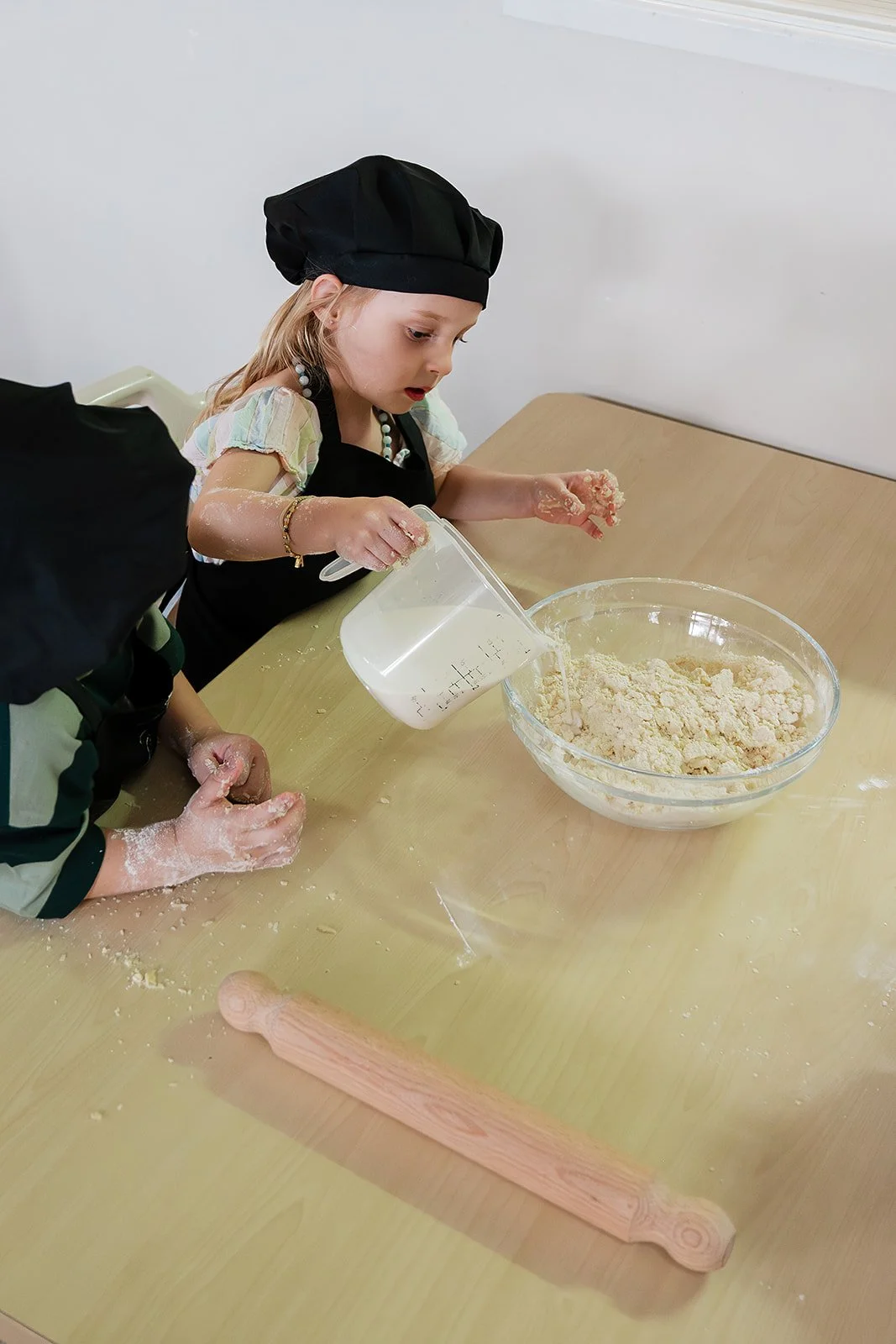
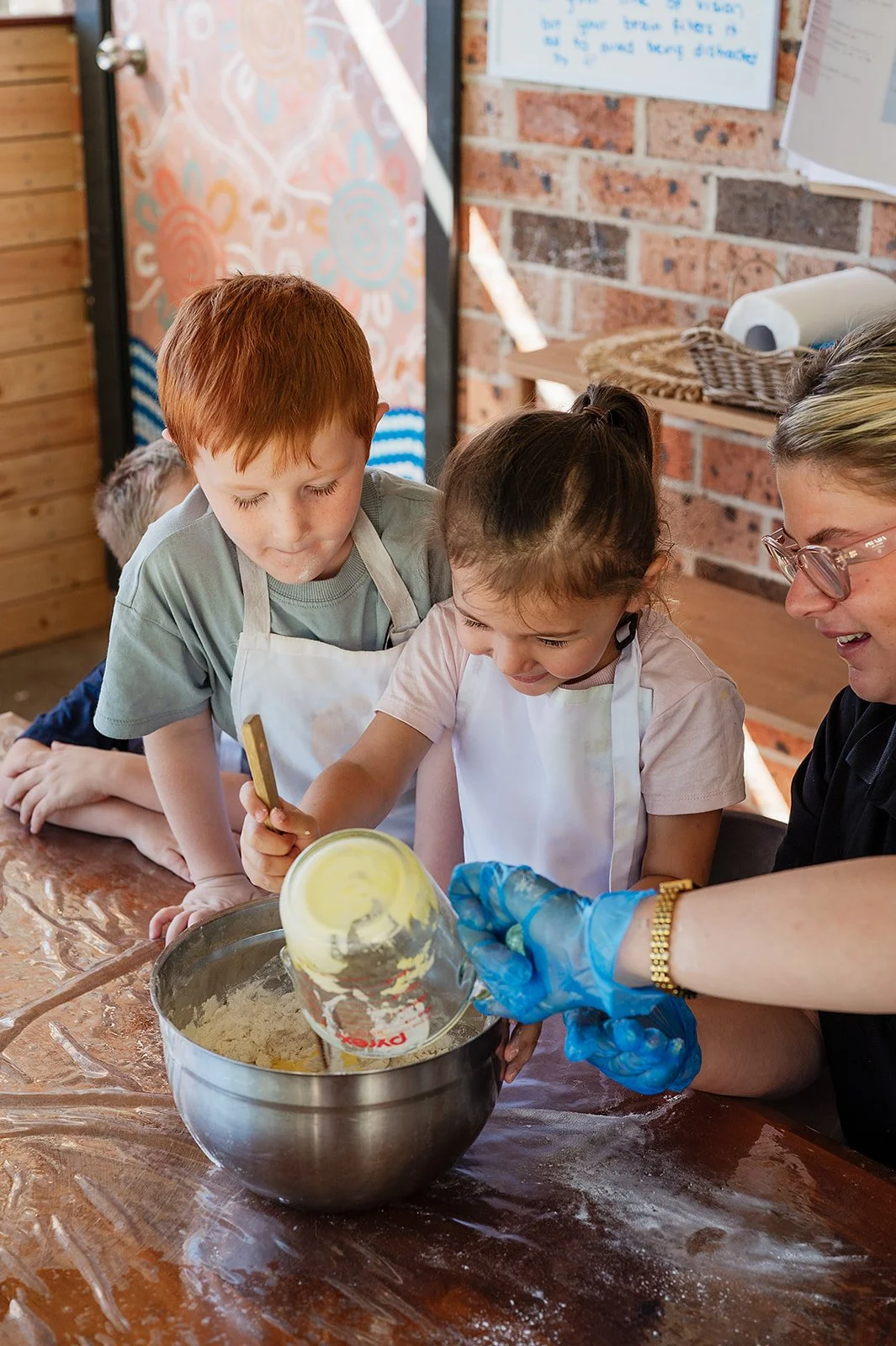
A simple recipe is a set of instructions, and following one is close to what a child does in their first days of school. Pour the flour, then the milk, then stir. When children cook alongside an educator, they practise listening to a direction, holding it in mind and carrying it out in order. That skill goes straight into the classroom, where so much of the early days is about following what the teacher has asked.
Early maths without the worksheet
There's a surprising amount of maths in a bowl of muffin batter. Counting the eggs, measuring a cup of flour, halving a banana, noticing that two small spoons fill the same space as one big one. Children pick up number, quantity and measurement by doing, long before it feels like a lesson. By the time they start school, these ideas already feel familiar.
Patience and taking turns
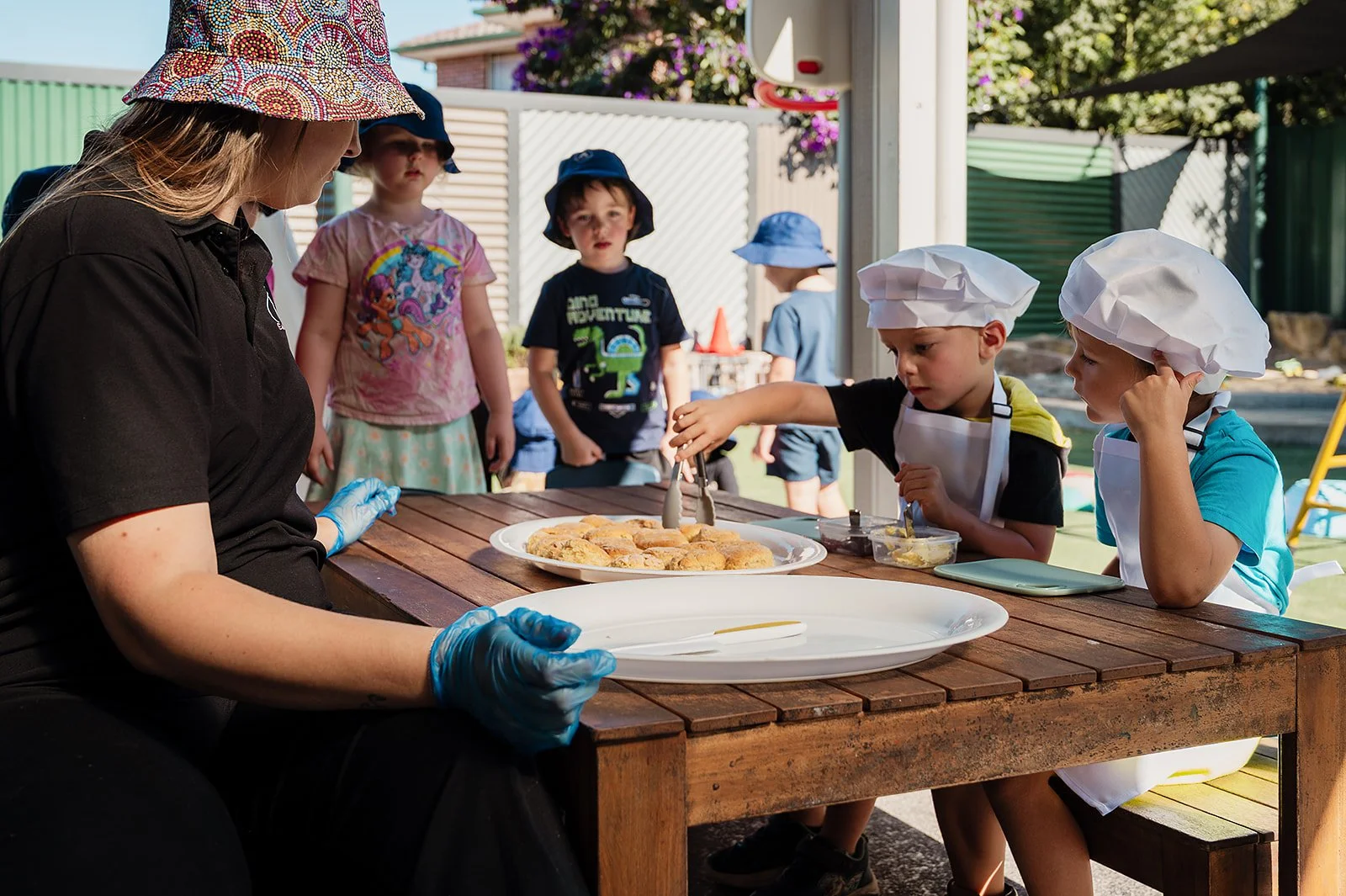
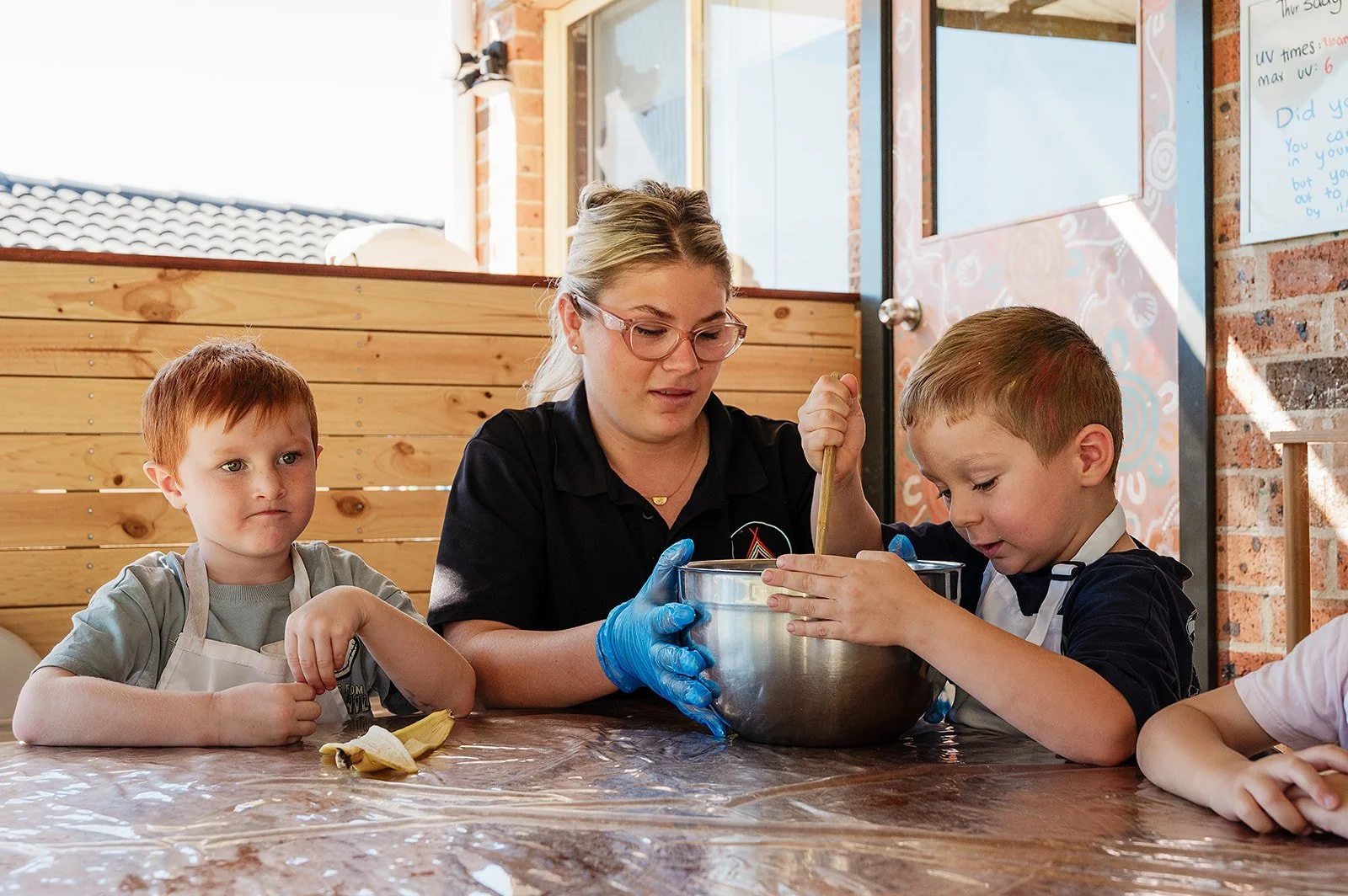
Cooking asks children to wait. Wait for the mixture to come together, wait for a turn to stir, wait for something to come out of the oven. In a group setting like our Cooking Hub, they also share equipment and take turns with the popular jobs, which is the same give and take they'll need in a busy classroom.
Independence and confidence
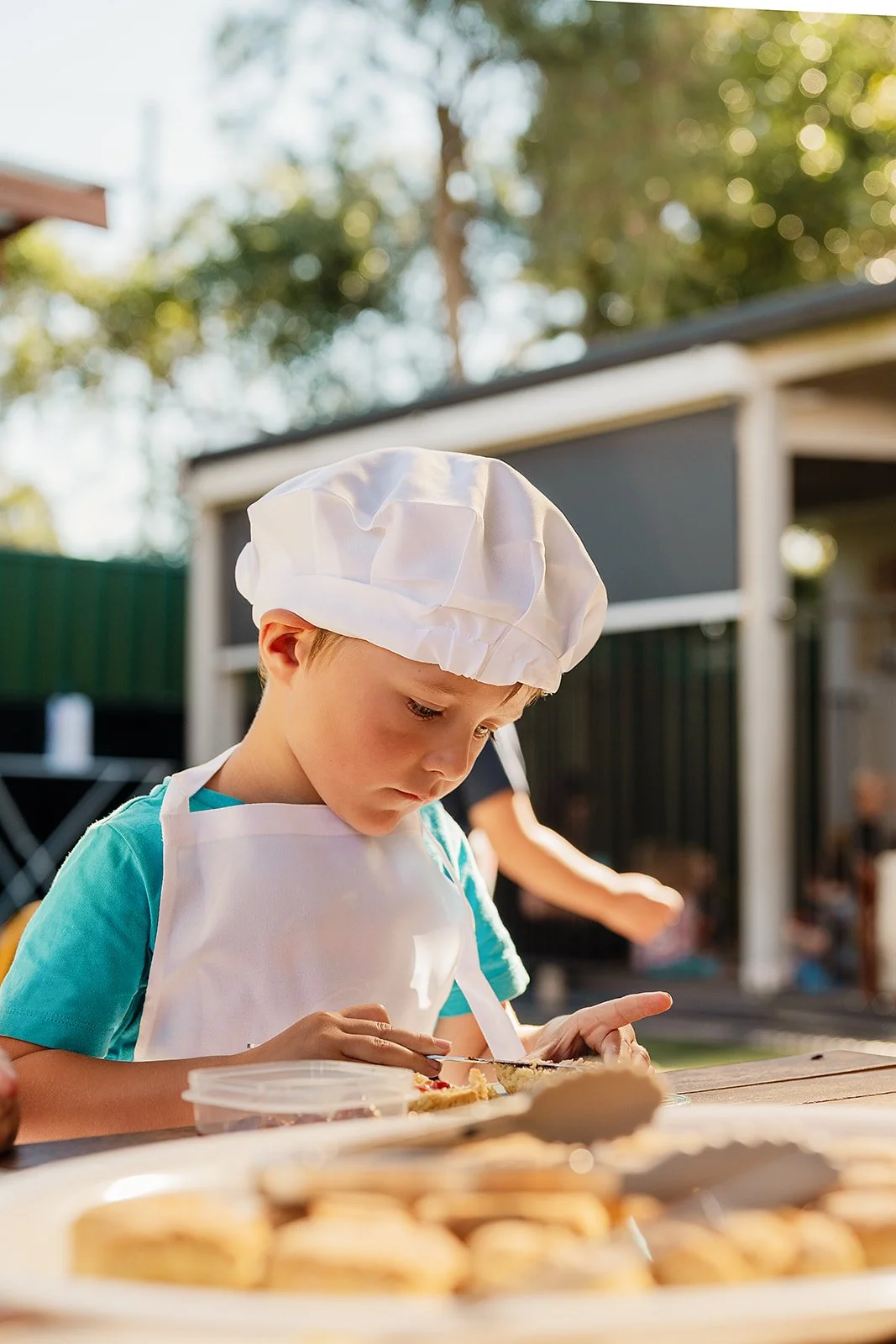
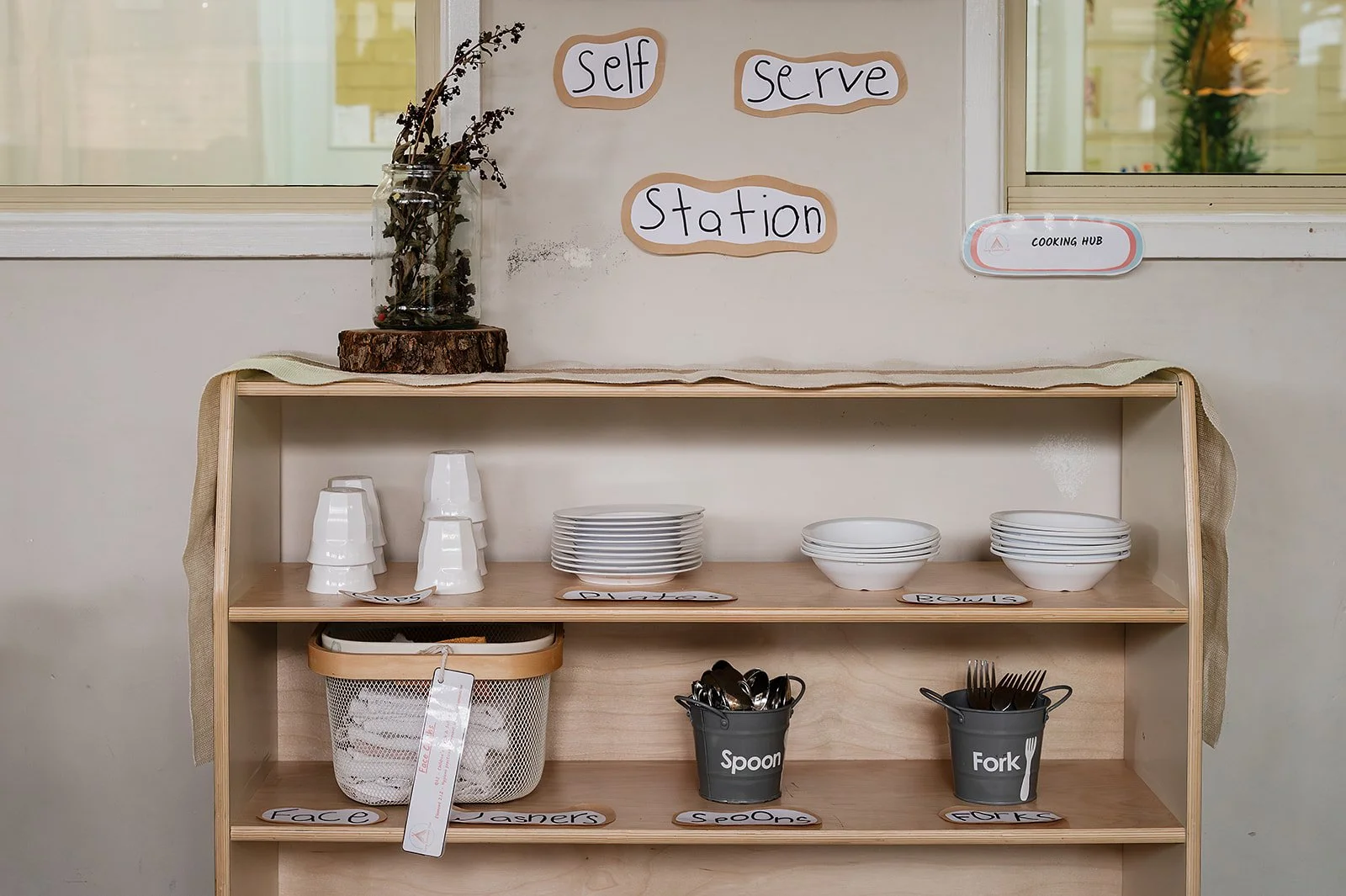
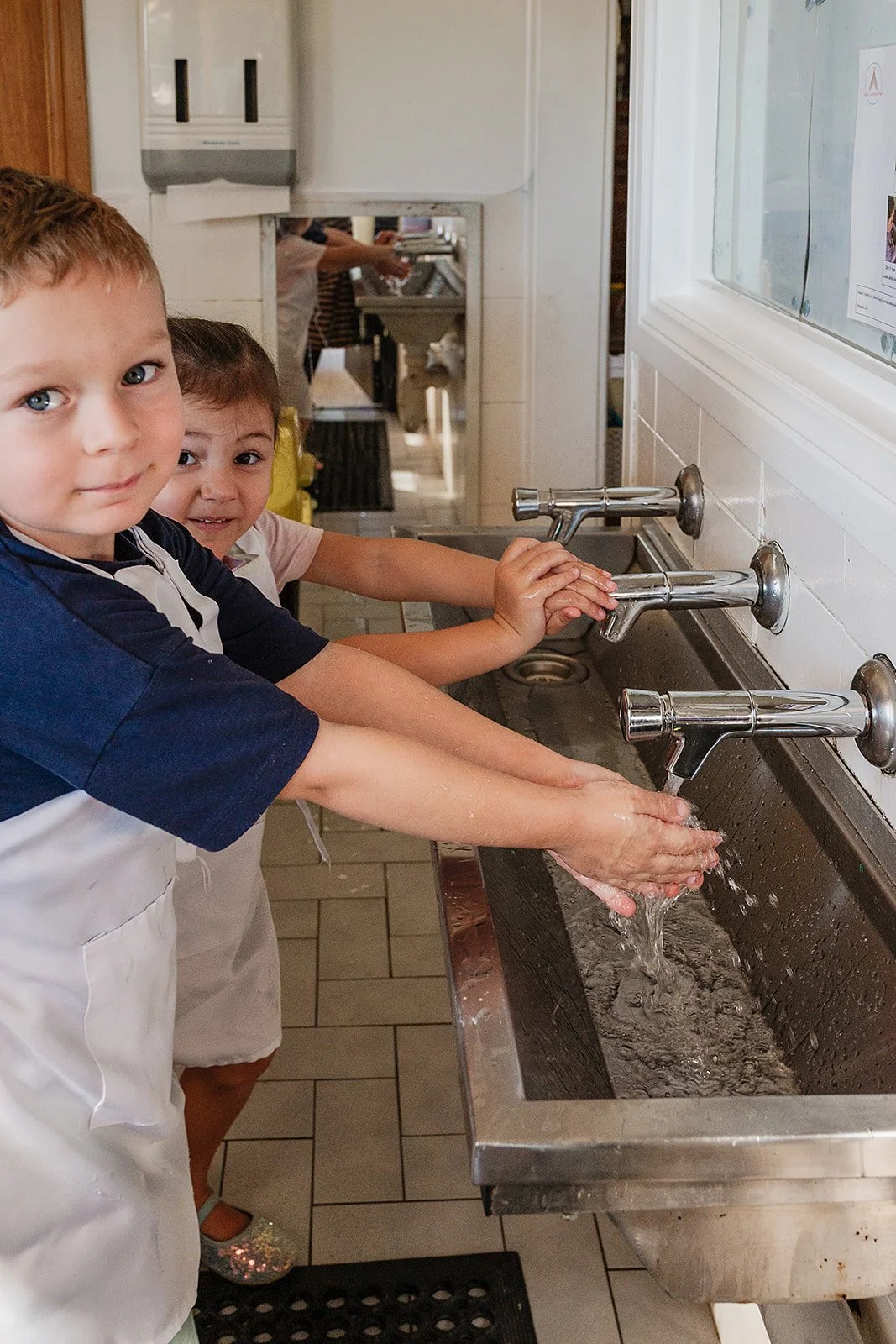
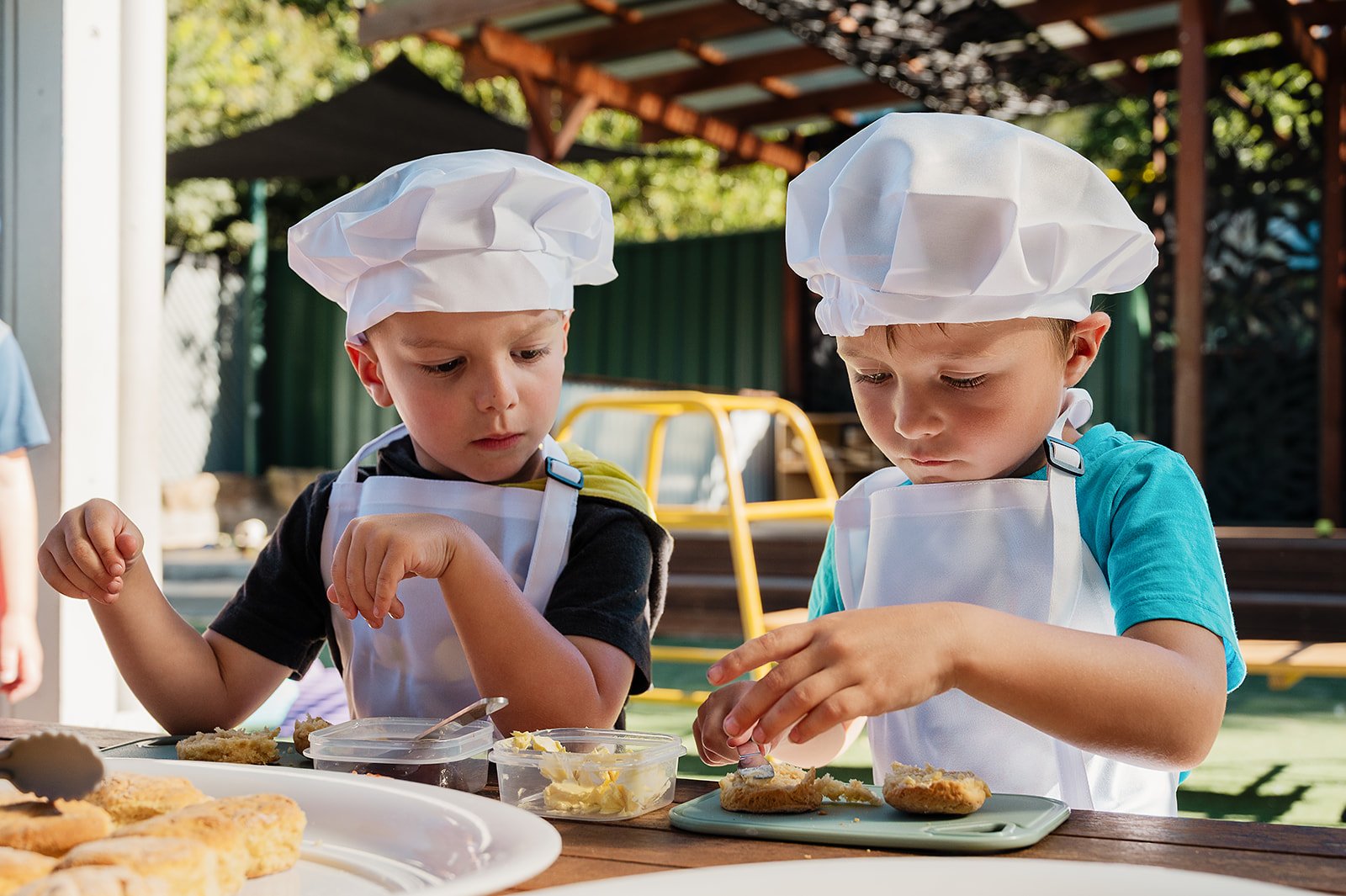
There's a particular look on a child's face when they've made something themselves and watched other people enjoy it. Cooking gives children small, real responsibilities: washing their hands, putting on an apron, finding their spot at the bench and tidying it up afterwards. Managing those on their own builds the kind of confidence that helps a child walk into a new classroom and feel capable.
Language and vocabulary
Cooking is full of talk. Children hear and use words they might not meet anywhere else, like whisk, knead, simmer and sprinkle. They describe how things smell and feel, they name what they're doing, and they answer an educator's questions as they go. That back and forth grows the vocabulary that reading and writing will build on at school.
How the Cooking Hub fits into the week
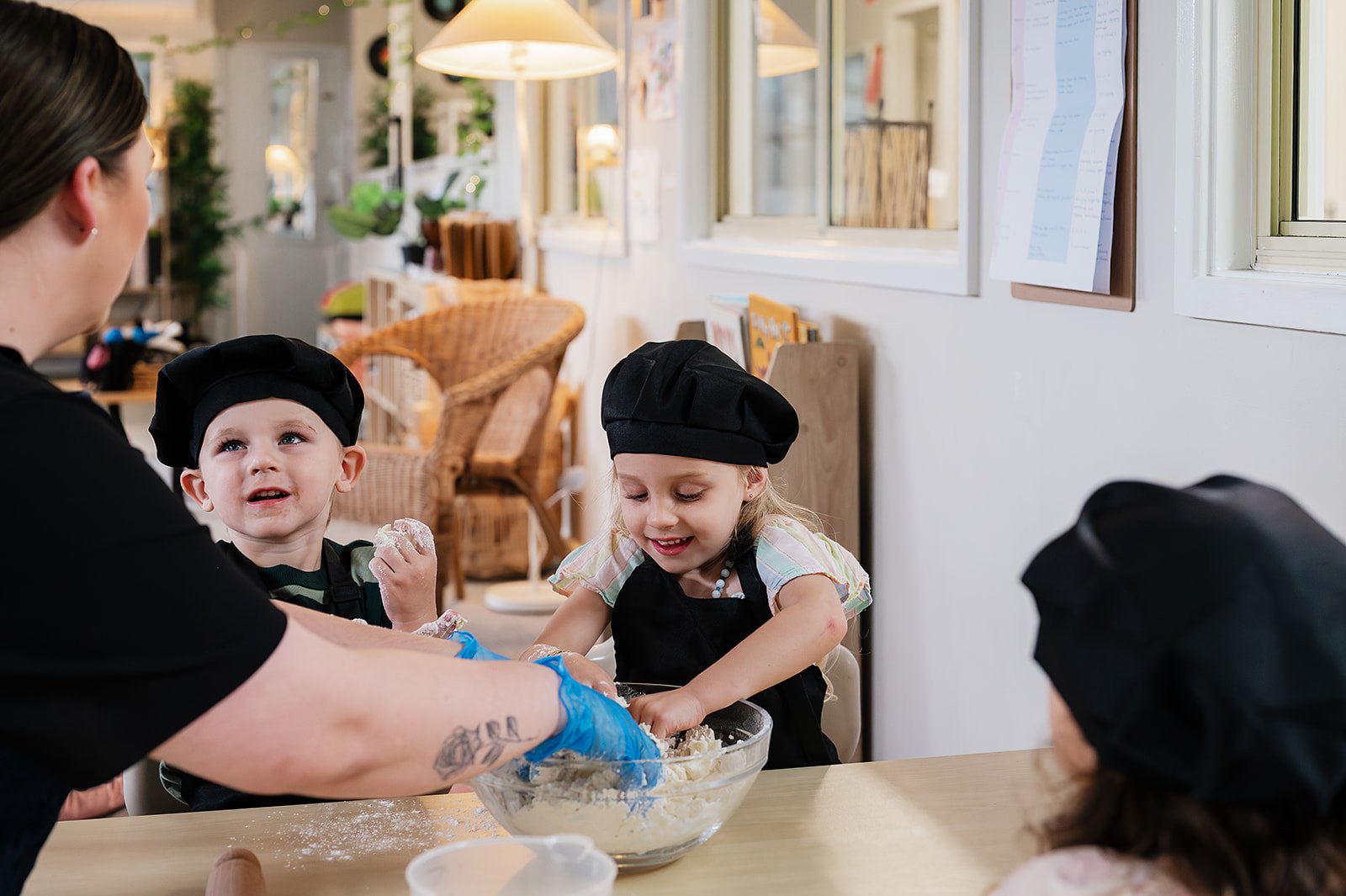
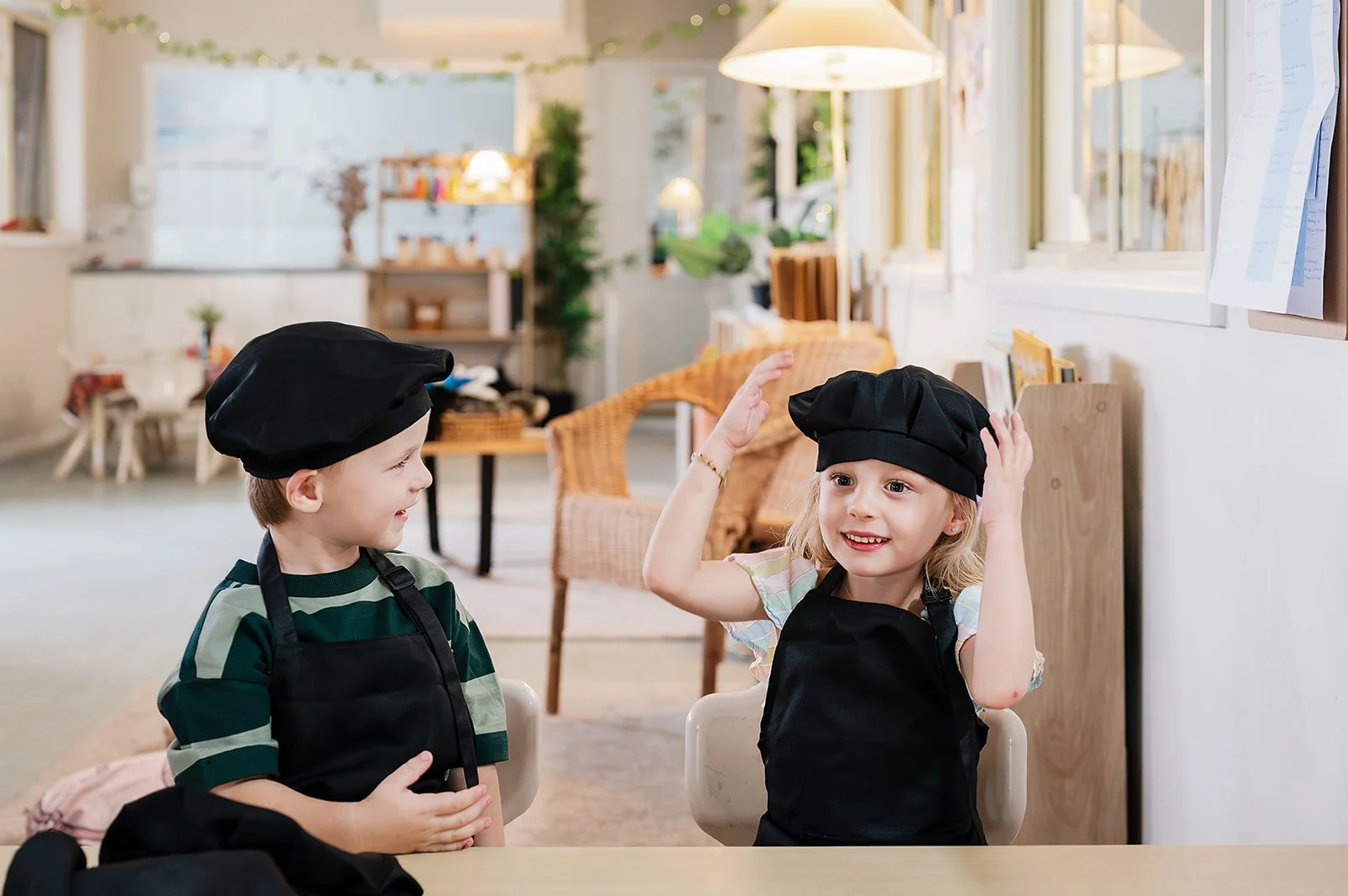
At Early Learners Hub, cooking is a regular part of the week. Our Cooking Hub is a dedicated hands-on program where children across our Albion Park and Blackbutt Centres prepare simple recipes with their educators, try new foods and learn where food comes from. It sits alongside our School Readiness program and our Transition to School program, so the skills children build in the kitchen connect to everything else we do to get them ready for that first day.
If your child is starting school in the next year or two, cooking together at home is one of the easiest ways to help, and you don't need anything fancy to begin. You're welcome to read more about our Cooking Hub and School Readiness program to see how the same ideas run through the day at our Centres.
Frequently Asked Questions
-
Cooking lets children practise following instructions, counting and measuring, waiting and taking turns, and doing things for themselves. These are the everyday skills a child leans on in their first year of school.
-
Even toddlers can help with simple, safe tasks like stirring, pouring and sprinkling. As children get older they follow longer recipes and take on more of the steps themselves.
-
Making muffins, spreading toppings on a wrap, decorating biscuits or mixing a simple salad all work well. Let your child do the counting, measuring and stirring, and talk through each step as you go.